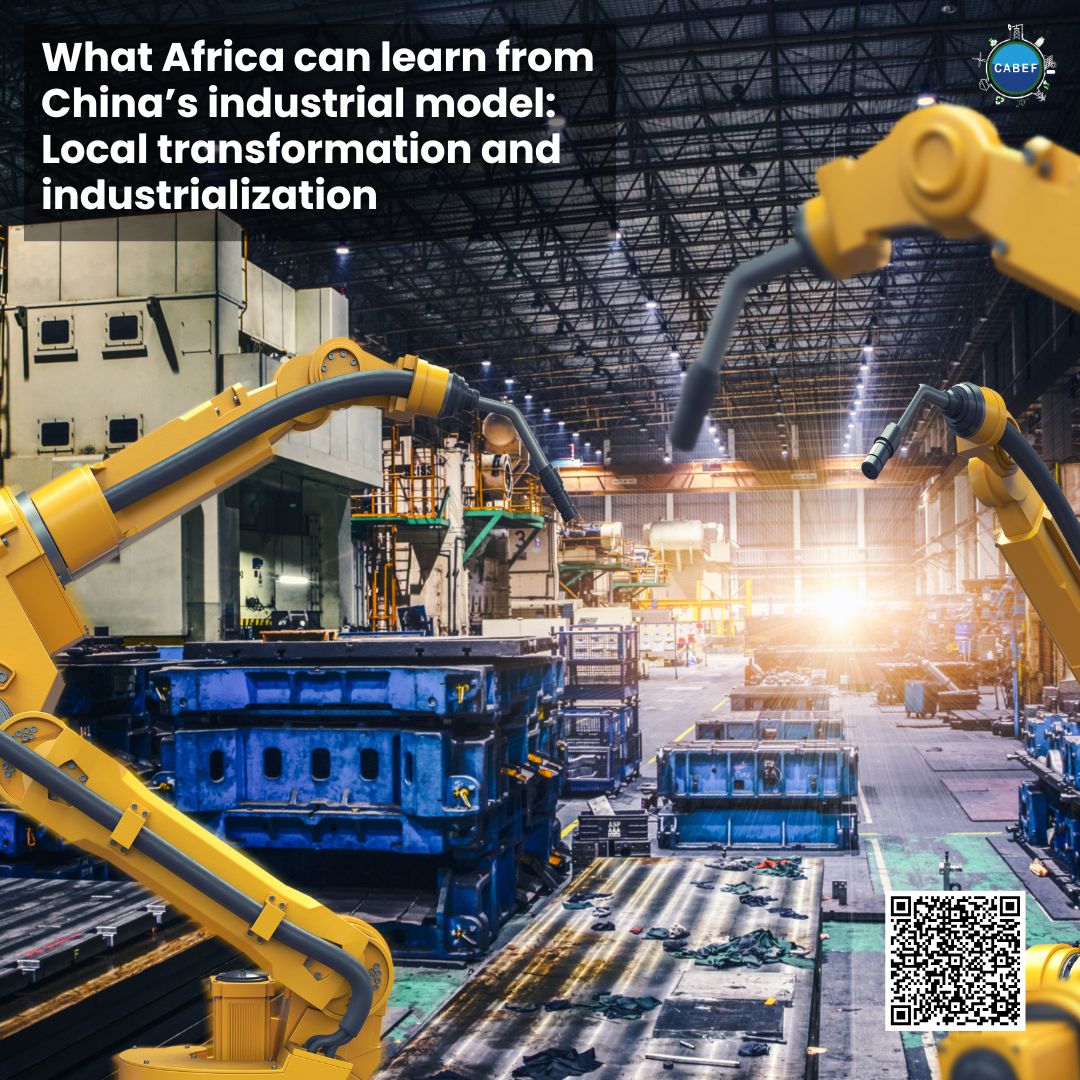
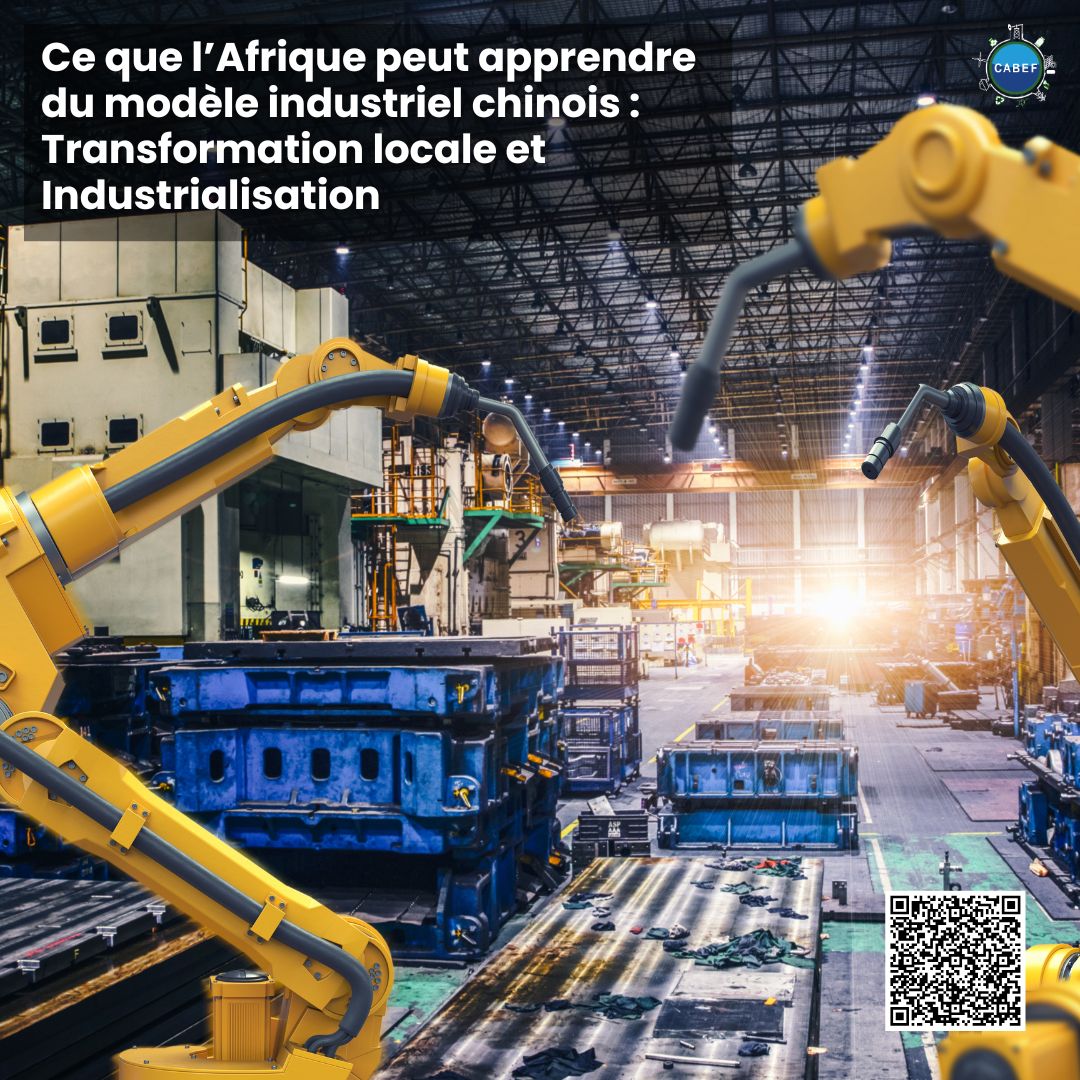
Africa, a continent with immense potential, stands at a decisive crossroads in its economic development. As the pursuit of sustainable, value-creating industrialization intensifies, China’s industrial development model offers a rich analytical framework. In just a few decades, China has undergone a spectacular economic transformation, moving from an agrarian economy to a global manufacturing powerhouse.
This trajectory—marked by rapid, structured, and strategic industrialization, along with the creation of specialized industrial zones—provides concrete pathways for African nations seeking to catalyze their own industrial growth. Examining the key mechanisms behind China’s success highlights how Africa can draw inspiration to foster deep local transformation of its value chains.
For professionals in the energy and industrial sectors, this awakening is even more critical as the Central Africa Business Energy Forum (CABEF) prepares to host its “CABEF Beyond Borders” edition in August 2026 in Dongying, China. This event represents an unprecedented strategic opportunity to establish direct connections with this economic giant and its energy advancements.
Context: Africa’s Industrialization Challenge and the Chinese Model
Historically, many African countries have been confined to exporting raw materials, limiting their ability to generate added value and create skilled jobs. The major challenge lies in transitioning from an extractive economy to a diversified and resilient manufacturing economy.
Over four decades, China has evolved from an agricultural economy into a global industrial power. The keys to this success include:
- Strong state planning;
- Accelerated industrialization through strategic planning and massive infrastructure investment;
- Value creation through local processing of raw materials;
- Creation of specialized industrial zones concentrating infrastructure, skills, and innovation;
- Implementation of proactive industrial policies.
These factors enabled rapid accumulation of capital and expertise. The Chinese experience demonstrates that successful industrialization goes beyond factory construction—it requires a holistic vision including education, innovation, and integration into global markets.
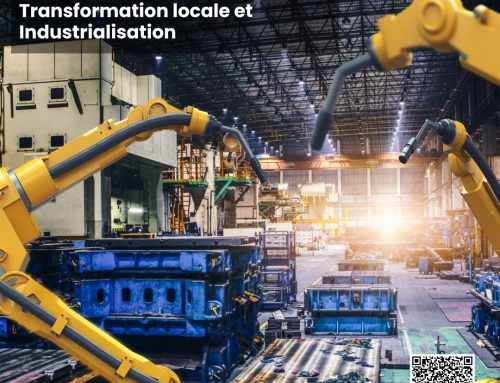
Accelerated Industrialization: The Secret Behind China’s Growth
China has successfully orchestrated rapid industrialization driven by massive investments and an abundant, increasingly skilled workforce. This pace was made possible by a combination of factors:
- Progressive public policies (subsidies, infrastructure, training);
- Public-private partnerships to attract capital and technology;
- Targeted exports that financed internal modernization;
- Attraction of foreign direct investment;
- Favorable fiscal and regulatory incentives.
For Africa, the challenge is to define a coherent continental strategy capable of accelerating industrial transformation without relying solely on external markets, while creating a favorable business environment, mobilizing capital (domestic and foreign), and developing targeted industrial policies that encourage local production and economic diversification.
From Raw Materials to Finished Products: The Imperative of Value Addition
One of the pillars of the Chinese model is its ability to locally transform raw materials into high value-added finished products. This strategy not only captures a larger share of generated wealth but also strengthens economic sovereignty.
Rather than exporting raw iron ore, China developed complex steel industries and later manufacturing sectors using these materials.
Exporting raw materials deprives African countries of substantial revenues. China has shown that:
- Local transformation increases national wealth;
- Finished and semi-finished products capture larger international markets;
- Moving up the value chain creates skilled jobs and stabilizes economies.
Africa, rich in natural resources, must follow this path. Initiatives to process cocoa into chocolate, cotton into textiles, refine crude oil, or transform minerals into semi-finished products are essential to break dependence on raw exports and maximize benefits.
Specialized Industrial Zones: Engines of Growth
Special Economic Zones (SEZs) have played a central role in China’s industrialization, acting as laboratories for economic development. Equipped with modern infrastructure, tax incentives, and simplified administration, they have attracted businesses, fostered technology transfer, and created employment hubs.
In Africa, SEZs are already being tested. The port-industry-city integration model illustrates this synergy, with examples such as the Kribi port in Cameroon and the Lekki Free Trade Zone in Nigeria, developed with Chinese support.
Africa can draw inspiration by developing industrial clusters that concentrate:
- Adequate infrastructure (roads, ports, energy),
- Skilled and abundant labor,
- Synergies between businesses, research, and innovation,
to create regional industrial zones specialized in agro-industry, energy, mining, oil, gas, or green technologies.
Training the Builders of Tomorrow: Skills Transfer
Industrialization cannot occur without a skilled workforce. China has heavily invested in technical and vocational training—an essential priority for Africa.
Chinese initiatives in Africa, such as Luban workshops and technology training centers like CINFOTEC in Angola, aim to equip African youth with the skills needed to operate and innovate in modern industries.
This transfer of expertise is crucial to transforming Africa’s demographic dividend into a real driver of industrial development and technological sovereignty.
CABEF Beyond Borders 2026: A Strategic Opportunity in Dongying
As part of this dynamic of cooperation and learning, CABEF is organizing an exceptional edition titled “CABEF Beyond Borders” in Dongying, China, in August 2026. Participating in this event offers African economic actors a unique opportunity for several strategic reasons:
| KEY ADVANTAGE |
DESCRIPTION AND OPPORTUNITY FOR PARTICIPANTS |
| Energy Expertise | Dongying hosts the Shengli oilfield, China’s second largest, and is a global hub for oil and gas equipment manufacturing. Participants will gain access to cutting-edge technologies to optimize local production.
|
| Zero Tariffs | With China’s removal of tariffs for 53 African countries in May 2026, CABEF Beyond Borders comes at the ideal time to help companies negotiate export agreements for processed goods to the Chinese market without tariff barriers. |
| Transition and Innovation | Dongying is becoming a “zero-carbon industrial hub” through partnerships with major players such as CATL. This offers an opportunity to explore how energy can drive Africa’s industrial growth. |
| Direct Partnerships | The event will facilitate direct networking with investors and public-private partners, enabling the signing of agreements and joint ventures for local processing units in Central Africa. |
Conclusion: Toward Autonomous and Diversified African Industrialization
China’s industrial model offers Africa a pragmatic roadmap for its own development. By focusing on local transformation of raw materials, strengthening value chains, creating specialized industrial zones, and investing massively in vocational training, African nations can accelerate their industrialization.
The goal is not to replicate China’s model blindly, but to extract adaptable principles suited to local contexts, in order to build an autonomous industrial base that generates wealth and sustainable jobs.
The objective is to transition from a dependent economy to a diversified and resilient one, capable of fully integrating into the global economy.
Participating in CABEF in Dongying means immersing oneself in a successful development model and seizing new trade opportunities offered by China to accelerate Africa’s industrialization.
The CABEF team
References
- La coopération sino-africaine alimente l’industrialisation en Afrique – Xinhua. https://french.xinhuanet.com/20250612/87e1e89ed9ff4e39a4935551246d9e29/c.html
- Dongying City – Energy Cities. https://energycities.org/member-cities/dongying-china/
- Jingtao Energy – Smart Oilfield Equipment Manufacturer. https://jingtaoenergy.com/
- Zero tariffs for Africa: the Chinese decision that could reshape the global trade landscape – CABEF. https://wearecabef.org/zero-tariffs-for-africa-the-chinese-decision-that-could-reshape-the-global-trade-landscape/
- CATL Collaborates with Dongying to Build Zero-Carbon Industrial Hub. https://www.catl.com/en/news/6397.html
- CABEF Beyond Borders 2026 – Official LinkedIn. https://www.linkedin.com/posts/cabef-org_cabef-energy-caps-activity-7432674029544779776-zOEb

Laisser un commentaire